









ΣΧΕΤΙΚΑ ΑΡΘΡΑ


Panama and Greece have developed strong diplomatic and maritime ties over the years.
A significant historical milestone in this relationship dates back to August 15, 1914, when Greek captain Nikitas Mavrakis became the first person to navigate the Panama Canal aboard the steamship SS Ancon, piloting the vessel from the Atlantic Ocean to the Pacific Ocean during the Canal’s inaugural transit.
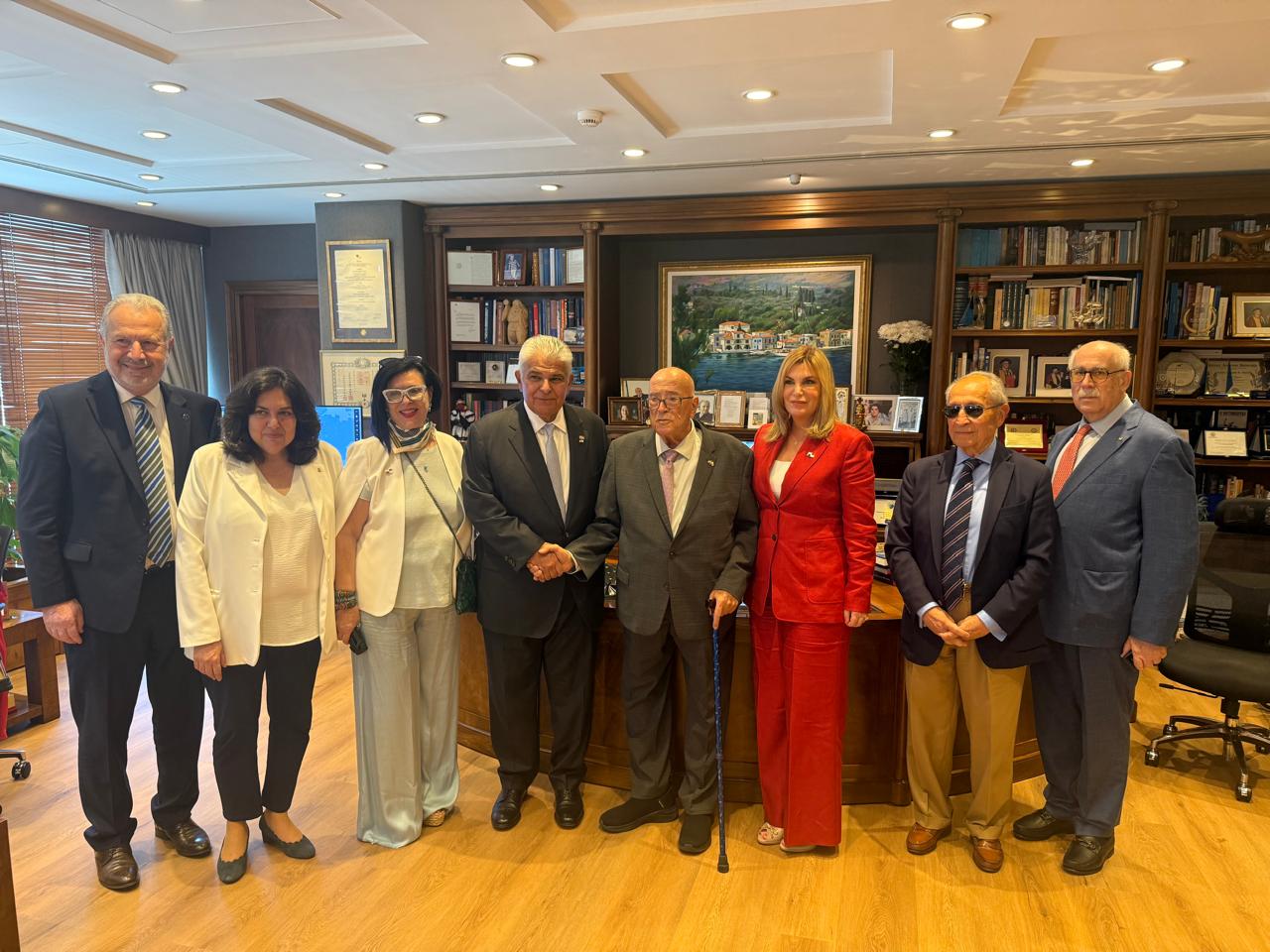
These longstanding relations were further reinforced by the recent visit of the President of Panama, José Raúl Mulino Quintero, to Greece on the occasion of the international shipping exhibition “Posidonia 2026”. During his visit, President Mulino held high-level meetings with the President of the Hellenic Republic, Constantinos Tasoulas, senior government officials, and leading Greek shipowners.
The President’s presence in Greece was undoubtedly a personal diplomatic success for the Ambassador and General Consul of Panama in Greece, Julie Lymberopoulos-Karnakis.
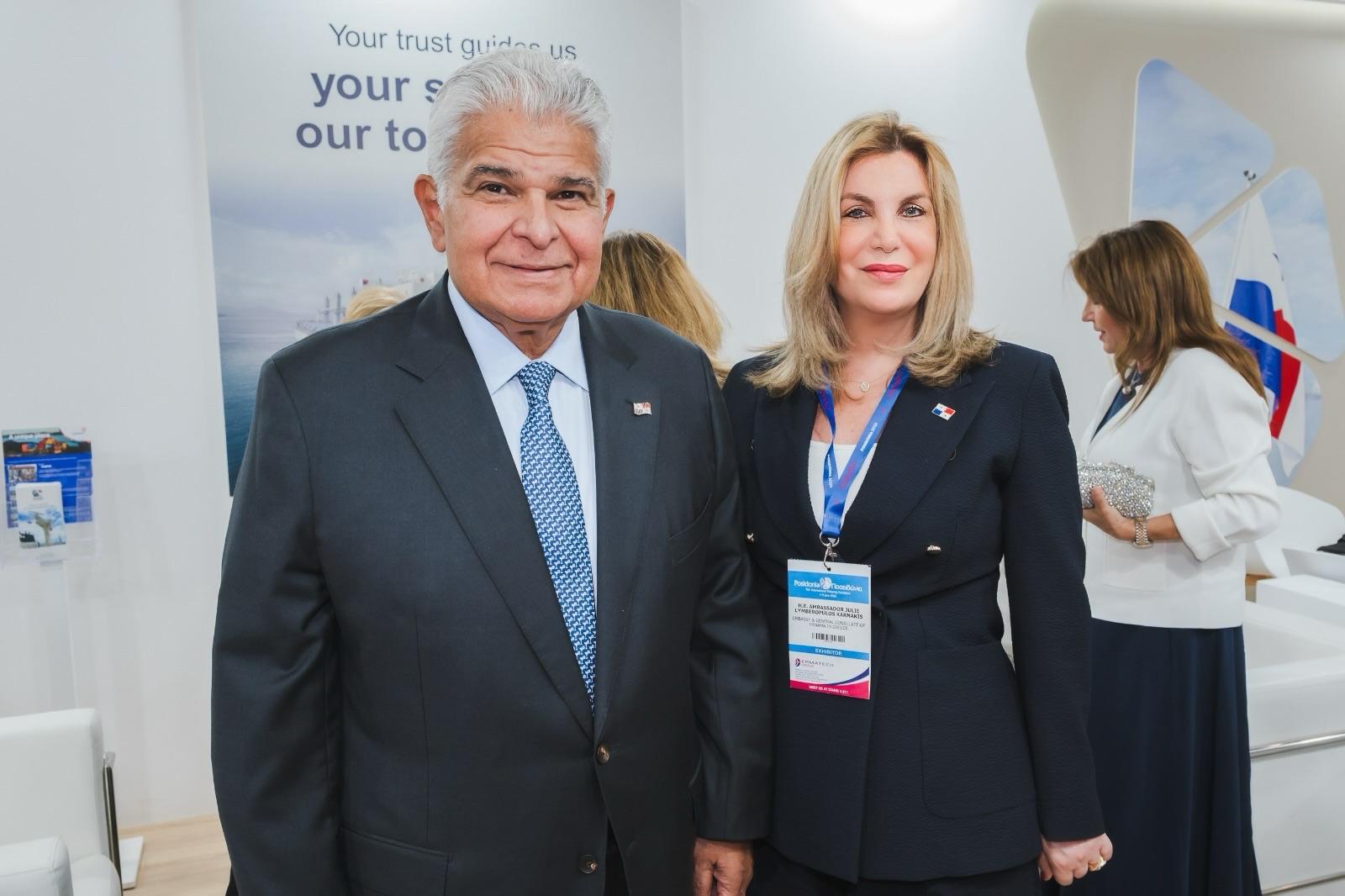
Julie Lymberopoulos-Karnakis has distinguished herself through her unwavering commitment, profound expertise in maritime affairs, and her genuine affection for both Panama and Greece.
She is widely respected for her warmth, approachability, and remarkable ability to establish trust from the very first meeting.
Her personality combines diplomatic sensitivity with a strong sense of public service, qualities that have earned her recognition within the diplomatic corps accredited in Athens.
Born in Panama to a family of Greek heritage, Ambassador Lymberopoulos-Karnakis maintains a deep and authentic connection with Greece, its history, and its culture.
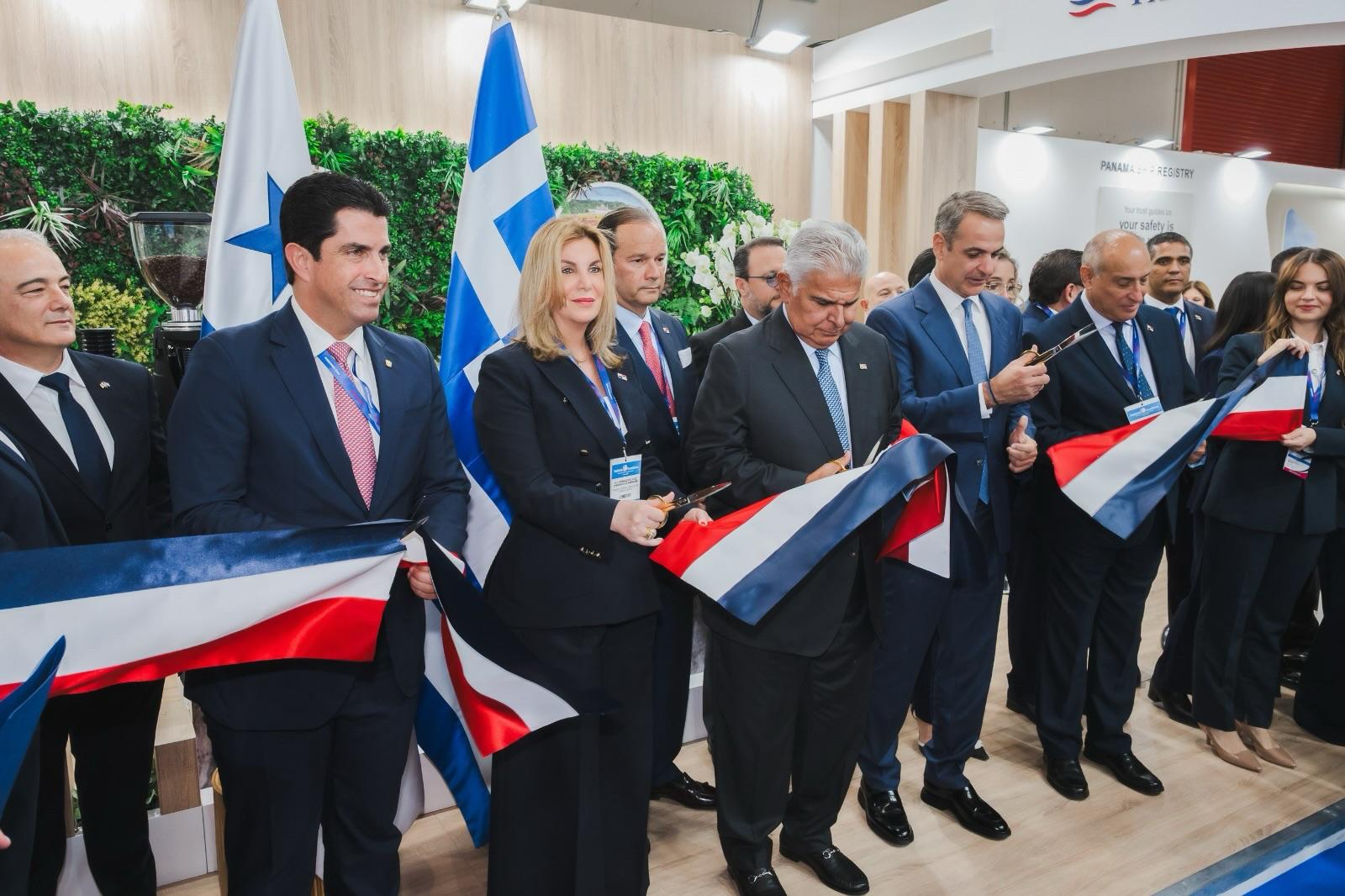
This dual identity has enabled her to serve as a natural bridge between the two nations, fostering mutual understanding and facilitating cooperation across strategic sectors.
Her professional career reflects extensive knowledge of both Panama’s institutional framework and the international maritime industry.
Having served for more than a decade as Panama’s Commercial Attaché in Greece, she has gained unparalleled insight into the Greek market and its strategic role within the global maritime industry.
This background provides her with a uniquely informed perspective on the dynamics linking the two maritime nations.
As Ambassador and General Consul of Panama in Greece, she has assumed the responsibility of strengthening bilateral relations, placing particular emphasis on maritime cooperation – a historic and strategic pillar of the relationship between Panama and Greece.
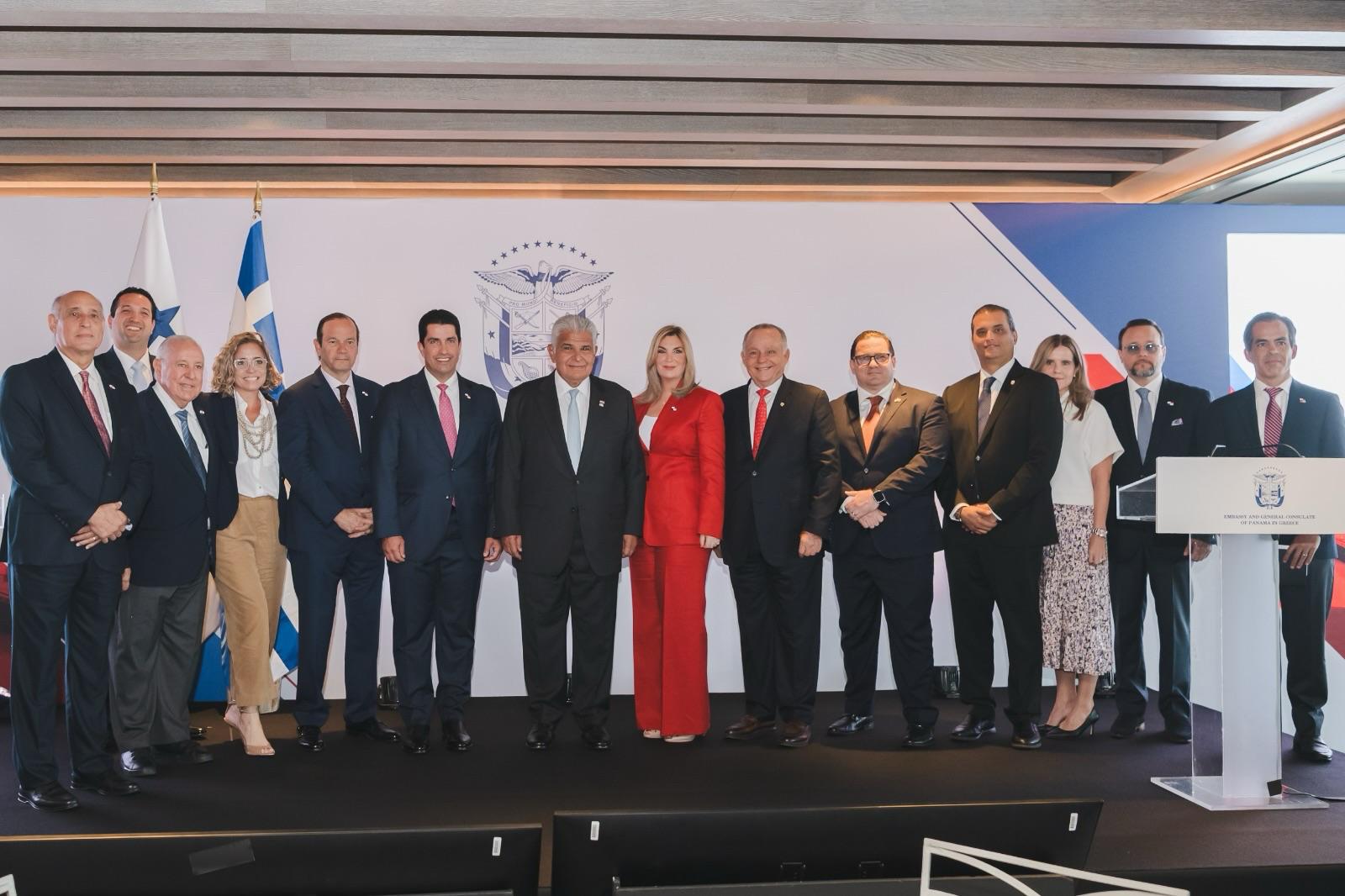
Her work focuses on strengthening and deepening this partnership within an increasingly interconnected international environment, recognizing the considerable opportunities for expanded cooperation in key sectors such as maritime trade, logistics, and international shipping regulation.
A particularly significant milestone in Panama-Greece relations occurred in June, when she played a central role in facilitating and coordinating the official visit of President José Raúl Mulino to Greece.
This high-level engagement marked an important step forward in bilateral diplomacy. During the visit, substantial discussions and negotiations took place on maritime affairs, further strengthening the longstanding partnership between Panama and Greece in global shipping and maritime governance.
Beyond the maritime sector, the Ambassador’s leadership also contributed to broadening the bilateral agenda into broader areas of cooperation.
Notably, the visit culminated in the signing of a Memorandum of Understanding on Political Consultations between the Ministries of Foreign Affairs of the two countries, as well as a Memorandum of Understanding on Tourism Cooperation between their respective Ministries of Tourism.
These agreements reflect the diversification and deepening of bilateral relations, expanding cooperation beyond shipping into political dialogue and sustainable tourism development.
This milestone highlights the Ambassador’s broader diplomatic vision, extending well beyond traditional maritime cooperation and positioning her as a key facilitator in building a multidimensional partnership between Panama and Greece based on political dialogue, economic cooperation, and cultural exchange.
During recent meetings, issues of common interest between Greece and Panama were discussed, alongside her continued focus on managing diplomatic relations with the Greek shipping community.
The Ambassador has repeatedly expressed her deep appreciation for Greek shipowners, who have historically constituted one of the principal pillars of the Panama Ship Registry, the world’s largest merchant fleet registry.
Likewise, she emphasizes the institutional strength of the Panamanian flag, underscoring the country’s commitment to the highest international standards of compliance, transparency, and adherence to applicable international sanctions regimes.
Most importantly, under her leadership, Panama’s diplomatic mission continues to strengthen the country’s position as a reliable, modern, and strategic player in the global maritime system.
Interview with Panama’s Ambassador to Greece, Julie Lymberopoulos-Karnakis
What are Panama’s main strategic objectives regarding maritime cooperation with Greece?
“Panama’s maritime cooperation with Greece is guided by a set of long-term strategic objectives aimed at strengthening alignment between two leading maritime nations while ensuring sustainable development within the global shipping industry.
A key priority is fleet modernization. Panama seeks to attract newly built, technologically advanced Greek vessels, thereby maintaining a younger, more efficient fleet under the Panamanian flag that is fully aligned with evolving international standards.
Another major objective is regulatory alignment within multilateral forums, particularly the International Maritime Organization (IMO). Both countries engage in constructive coordination to support common positions on maritime safety, environmental protection, and decarbonization policies, thereby strengthening their influence on global maritime governance.
Knowledge transfer also plays a central role in this partnership. Panama and Greece exchange best practices in areas such as ship technical management, port automation, and maritime safety protocols. This exchange of expertise enhances operational efficiency while fostering continuous innovation across both maritime ecosystems.”
How does Panama’s geopolitical position influence decisions regarding international trade routes and maritime policy?
“Panama’s unique geographical position as the bridge between the Atlantic and Pacific Oceans gives the country a distinctive role in global maritime trade. The neutral administration of the Panama Canal helps establish international transit standards, while policy decisions have a direct impact on the efficiency of trade routes connecting the United States with Asia, as well as South America with Europe.
Furthermore, Panama’s maritime policies serve as a benchmark in areas related to international maritime security, law enforcement, and the resilience of global supply chains.”
How does the Embassy of Panama facilitate investment and cooperation between shipping companies from both countries?
“The Embassy of Panama in Greece plays an active role as both a diplomatic and commercial facilitator between the two maritime sectors.
It promotes business-to-business (B2B) partnerships by organizing bilateral forums that connect Greek ship management companies with Panamanian providers of legal, logistics, and maritime services.
The Embassy also helps reduce administrative barriers by streamlining consular procedures in Athens, including document authentication, seafarer certifications, and corporate registry formalities.
In addition, it actively promotes investment opportunities by highlighting Panama’s fiscal and operational incentives, including those available in Special Economic Zones such as Panama Pacifico, thereby encouraging deeper commercial cooperation between the two countries.”
Decarbonization is currently the shipping industry’s greatest challenge. What initiatives has Panama undertaken to promote the adoption of alternative and green fuels?
“Panama actively supports the maritime transition toward alternative fuels through both infrastructure development and policy initiatives.
Efforts are underway to develop dedicated LNG bunkering infrastructure at Canal terminals, enabling transiting vessels to refuel with liquefied natural gas.
In addition, Panama offers incentives through reduced registration fees for newly built vessels utilizing alternative propulsion systems powered by methanol, ammonia, or hydrogen.
Shore power projects are also being implemented at major port terminals to reduce emissions generated by vessels while at berth.”
Does the Government of Panama provide incentives or support measures to help shipping companies comply with the International Maritime Organization’s increasingly stringent emissions regulations?
“The Government of Panama provides tangible financial incentives to assist companies in complying with the IMO’s increasingly demanding emissions requirements.
Vessels achieving high Energy Efficiency Design Index (EEDI) ratings may benefit from discounts of up to 100% on their initial registration fees.
Furthermore, fleets that demonstrate verified reductions in annual fuel consumption may qualify for reduced annual tonnage taxes.
Through SEGUMAR, the Panama Maritime Authority also issues technical circulars and organizes industry roundtables aimed at assisting operators in implementing Carbon Intensity Indicator (CII) optimization plans.”
What role does Panama play in protecting the marine environment and combating marine pollution?
“Panama plays an active role in protecting marine ecosystems through rigorous enforcement measures and strict compliance with international agreements.
The country conducts stringent inspections of ballast water treatment systems to prevent the spread of invasive aquatic species.
Panama also maintains robust enforcement frameworks for oil spills, bilge water discharges, and illegal plastic disposal in accordance with the MARPOL Convention.
In addition, efforts are underway to expand marine protected corridors surrounding the Galápagos–Cocos–Malpelo–Coiba Marine Corridor, helping minimize the environmental impact of commercial shipping in these ecologically significant waters.”
How is Panama investing in the digitalization of its ports and maritime registry?
“Panama is modernizing its maritime administration framework to enhance efficiency and reduce administrative burdens.
The introduction of secure, verifiable electronic statutory certificates has virtually eliminated the need for paper documentation.
Likewise, fully online platforms for seafarer applications, processing, and certificate renewals have streamlined services for maritime personnel.
In addition, the Single Maritime Window (VUMPA) serves as an integrated digital platform that facilitates customs, health, immigration, and port clearance procedures for arriving vessels.”
How is Panama addressing the growing cyber threats targeting maritime transport and global supply chains?
“In response to the increasing cyber threats affecting maritime transport and global supply chains, Panama has adopted a comprehensive cybersecurity framework.
This includes mandatory cyber risk management plans integrated into every vessel’s Safety Management System.
Regular cybersecurity audits are conducted on terminal operating systems in accordance with internationally recognized ISO/IEC 27001 standards.
Furthermore, the Panama Maritime Authority maintains centralized reporting mechanisms that facilitate the rapid exchange of cyber threat intelligence with international maritime security networks.”
Have the recent crises in the Red Sea and the Suez Canal made the Panama Canal an even more strategic hub for global shipping and free navigation?
“The recent disruptions affecting critical maritime corridors such as the Red Sea and the Suez Canal have further underscored the enduring strategic importance of the Panama Canal within the global shipping system.
In this context, the Canal increasingly serves as a reliable alternative route, offering shipping companies greater predictability and operational security when rerouting vessels away from areas affected by geopolitical instability or security risks.
This reliability further reinforces its role as a key component in maintaining the continuity of global maritime trade.
Beyond serving as an alternative passage, the Panama Canal also strengthens Panama’s position as a neutral logistics hub. Its operational framework and geographical location allow it to remain largely insulated from regional conflicts affecting Eurasian trade routes, thereby contributing to the stability of international supply chains during periods of heightened global uncertainty.
At the same time, long-term investments in infrastructure and sustainability remain essential to safeguarding the Canal’s competitiveness.
Significant emphasis has been placed on water resource management, including the development of additional freshwater reservoirs and enhanced operational systems designed to mitigate the effects of climate variability.
These measures are critical to preserving the Canal’s capacity, reliability, and resilience in the face of evolving environmental and commercial challenges.
Taken together, these factors reaffirm the growing importance of the Panama Canal not merely as a transit route, but as a strategic pillar of global trade and maritime connectivity.”
Are current geopolitical tensions and international sanctions affecting Panama’s ship registry and the operations of shipping companies sailing under the Panamanian flag?
“Current geopolitical tensions require a careful balance between neutrality and compliance with international obligations.
Panama actively removes from its registry any vessels found to be in violation of United Nations sanctions or other applicable international sanctions regimes.
Enhanced due diligence procedures and comprehensive Know Your Customer (KYC) mechanisms have also been implemented throughout the registry to strengthen transparency regarding beneficial ownership.
At the same time, Panama remains firmly committed to preserving the historic neutrality enshrined in the Panama Canal Treaties and to ensuring safe passage for vessels of all nations, even during periods of heightened global uncertainty.”

There is a global shortage of qualified seafarers. What initiatives is Panama undertaking to attract younger generations to maritime careers?
“Panama is actively addressing the global shortage of qualified seafarers by investing in educational and professional opportunities for younger generations.
Through international scholarship programmes, Panama offers fully funded places at maritime academies to both domestic and international students.
At the same time, the country is modernizing its STCW training curricula by incorporating advanced simulators, automation technologies, and specialized instruction in alternative fuels, making maritime careers increasingly attractive to a new generation of technologically skilled professionals.”
Are there exchange programmes or partnerships between Panama’s maritime academies and their Greek counterparts?
“Educational institutions in Panama and Greece maintain strategic partnerships aimed at strengthening cooperation and enhancing operational synergies.
Existing institutional agreements between the International Maritime University of Panama (UMIP) and Greek maritime academies support collaboration in areas of mutual interest.
In addition, cadetship programmes have been established to provide Panamanian students with onboard training opportunities aboard Greek-managed vessels sailing under the Panamanian flag.
Both countries also promote faculty exchanges, joint technical seminars, and academic cooperation focused on advanced navigation systems and environmentally sustainable maritime technologies.”
What message would you like to convey to the Greek shipping community through this interview with mononews.gr?
“Panama remains a steadfast and historically proven partner of the Greek shipping community.
Our relationship extends far beyond the registration of vessels under the Panamanian flag. It represents a strategic partnership built on mutual trust, a shared maritime heritage, and a common commitment to continuous adaptation in an ever-evolving industry.
As global shipping undergoes unprecedented digital and green transformations, Panama remains fully committed to enhancing its services, streamlining administrative procedures, and ensuring that Greek shipowners have access to the competitive, secure, and modern tools they need to navigate the future of global trade with confidence.
We deeply value the trust that the Greek maritime community has placed in Panama over many decades. This enduring relationship has contributed significantly to the strength and reputation of the Panama Ship Registry, while also reinforcing our shared commitment to safe, efficient, and sustainable shipping.
Looking ahead, our objective is not only to preserve this partnership but to elevate it even further through innovation, transparency, regulatory excellence, and close cooperation. We firmly believe that Panama and Greece, as two of the world’s leading maritime nations, have both the opportunity and the responsibility to help shape the future of international shipping.
Together, we can continue to promote a resilient, environmentally responsible, and technologically advanced maritime industry that benefits global trade and future generations alike.”
ΕΙΔΗΣΕΙΣ ΣΗΜΕΡΑ
- Γουίλιαμς: Η πτώση της ενέργειας θα αποκλιμακώσει τον πληθωρισμό – «Καλά τοποθετημένη» η νομισματική πολιτική
- Κασσελάκης: Μετά τον Γεωργιάδη κάλεσε στην εκπομπή του τον Μανώλη Χριστοδουλάκη (ΠΑΣΟΚ) – «Τένις παίζεις;»
- Τράπεζα της Ελλάδας: Απέστειλε την απάντησή της στο εξώδικο των ενώσεων καταναλωτών και επαγγελματικών φορέων
- Σταύρος Παπασταύρου: Η μεταρρύθμιση για τη διαχείριση υδάτων στο επίκεντρο της συνάντησης με βουλευτές της ΝΔ



Μοιραστείτε την άποψή σας
ΣχόλιαΓια να σχολιάσετε χρησιμοποιήστε ένα ψευδώνυμο. Παρακαλούμε σχολιάζετε με σεβασμό. Χρησιμοποιείτε κατανοητή γλώσσα και αποφύγετε διατυπώσεις που θα μπορούσαν να παρερμηνευτούν ή να θεωρηθούν προσβλητικές. Με την ανάρτηση σχολίου, συμφωνείτε να τηρείτε τους Όρους του ιστότοπου contact Δημιουργήστε το account σας εδώ, για να κάνετε like, dislike ή report ακατάλληλα/προσβλητικά σχόλια.